
When Energy Meets Food Security: Why the UAE Is the Perfect Place for the Next Generation of Hydroponic Infrastructure
Red Rock Editorial Team

March 9, 2026

Last Updated on March 9, 2026

7 min read
At Red Rock, we believe that the most powerful innovations emerge when two strategic systems converge. Energy and food. Infrastructure and resilience. Technology and sovereignty.
In the coming decade, one of the most transformative intersections of these systems will be controlled-environment agriculture, and few places on Earth are better positioned than the United Arab Emirates to lead this transition.
The reason is simple. The UAE is quietly becoming one of the most powerful solar energy ecosystems in the world. And that changes everything for the future of food production.
The Hidden Advantage: Solar Energy at National Scale
Few people outside the region fully understand the scale of the UAE's clean-energy transformation.
Dubai alone is building one of the largest solar infrastructures on the planet: the Mohammed bin Rashid Al Maktoum Solar Park, a massive renewable energy project developed by Dubai Electricity and Water Authority. Today the park already produces several gigawatts of power, and its capacity is expected to exceed 8,000 MW by 2030, making it one of the largest single-site solar parks in the world.
This infrastructure is not symbolic. It is structural.
The UAE's national energy strategy is explicitly designed to shift the country toward a clean and diversified energy mix, with ambitious targets that include generating up to 75% of Dubai's energy from clean sources by 2050.
At the same time, solar power prices in the region have reached global record lows. Recent solar projects in the UAE have achieved electricity prices close to 1.3 cents per kWh, among the lowest ever recorded worldwide.
This combination of massive solar capacity and extremely competitive energy costs creates a unique opportunity. Because energy is the key variable that determines the future of controlled-environment agriculture.
The One Metric That Changes Everything
When investors evaluate hydroponic or vertical farming systems, there is one metric that matters more than any other: energy intensity per kilogram of food produced.
If a controlled-environment farm requires too much electricity, the economics collapse. But if energy efficiency crosses a critical threshold, the model transforms.
As part of our work on next-generation food security infrastructure, Red Rock analyzes these systems with a simple rule: if energy consumption drops below 3 kWh per kilogram of produce, the system becomes economically powerful. Below this level, controlled agriculture moves from experimental sustainability to industrial infrastructure.
In regions with expensive electricity this threshold is extremely difficult to reach. But the UAE is not a typical energy environment. It is a country that has invested billions to build some of the most efficient solar energy systems on the planet.
Why the UAE Changes the Equation
The UAE's energy strategy was never just about sustainability. It is about strategic resilience.
Large-scale solar production, integrated grid infrastructure, and ambitious clean-energy targets create a landscape where energy-intensive technologies, from AI data centers to advanced agriculture, can operate at competitive cost.
Solar capacity in the UAE has expanded rapidly, reaching multiple gigawatts of installed generation in recent years. The Mohammed bin Rashid Al Maktoum Solar Park alone is expected to surpass 8 GW of production capacity by 2030. Dubai's clean-energy strategy aims for 75% clean energy by 2050, positioning the emirate as a global model for renewable infrastructure.
This transformation means that the UAE is not only a consumer of advanced technologies. It is becoming a platform for deploying them at scale. And controlled-environment agriculture is a perfect example.
From Agriculture to Infrastructure
Hydroponic farming is often misunderstood as a niche sustainability project. In reality, it is something much larger. It is food infrastructure.
The UAE imports a large share of its food supply due to climate and land constraints. Controlled-environment agriculture provides a way to produce high-quality fresh food locally with predictable output and minimal water consumption.
But the real breakthrough happens when agriculture aligns with the energy transition. When farms run on clean, scalable electricity, the system evolves from a fragile experiment into a resilient industrial network.
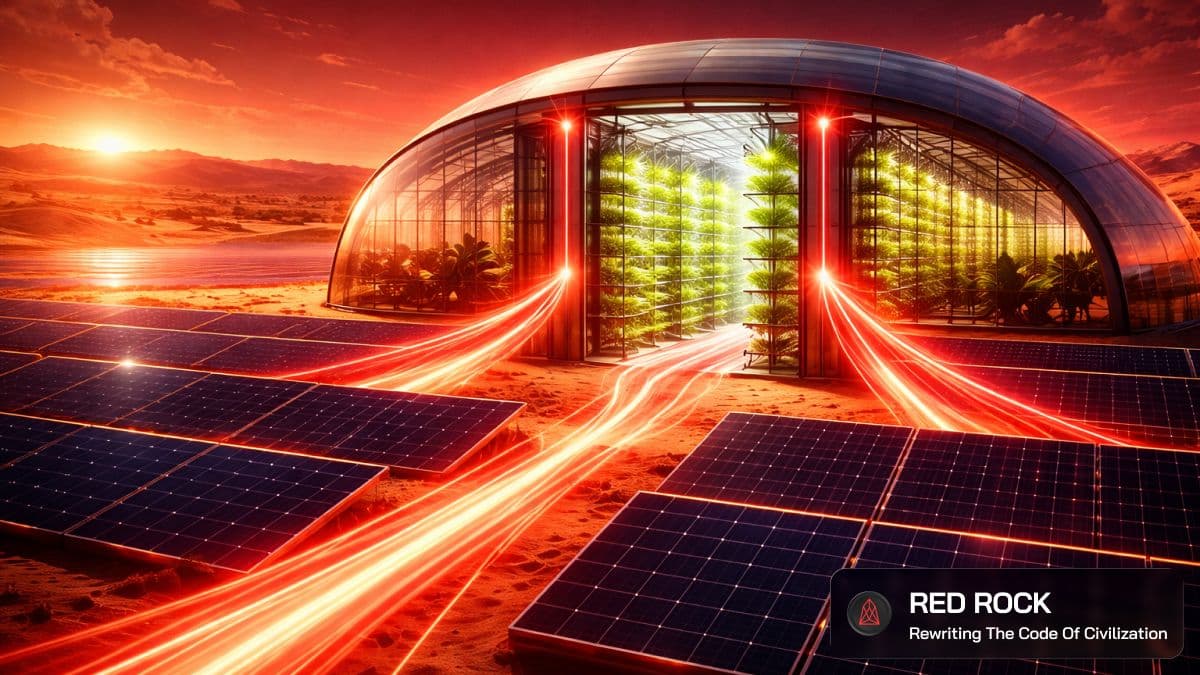
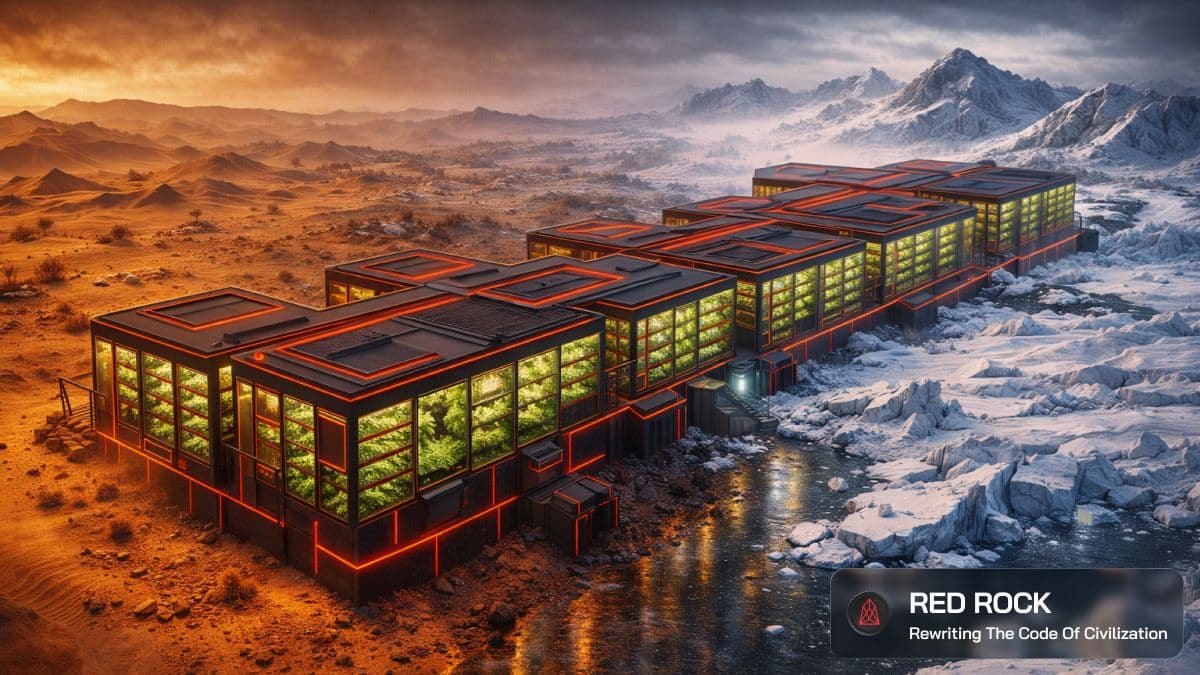
This is the future Red Rock is actively working to help build. As part of our food security infrastructure initiatives, we see clusters of hydroponic farms integrated into solar energy ecosystems, logistics infrastructure, urban food supply chains, and institutional procurement networks. In other words, farms that behave less like traditional agriculture and more like data centers for food production.
A Vision Aligned With the UAE's Long-Term Strategy
The leadership of the UAE has repeatedly emphasized that the country's development model is based on anticipating the future rather than reacting to it. Energy diversification, technological infrastructure, and food security are all part of this vision.
Controlled-environment agriculture sits exactly at that intersection. With abundant solar resources, world-class infrastructure, and a government committed to long-term resilience, the conditions are already in place for the next generation of food systems.
At Red Rock, we see this not as a trend, but as the beginning of a structural transformation.
The Future Is Built Where Systems Converge
Energy. Food. Technology. Infrastructure.
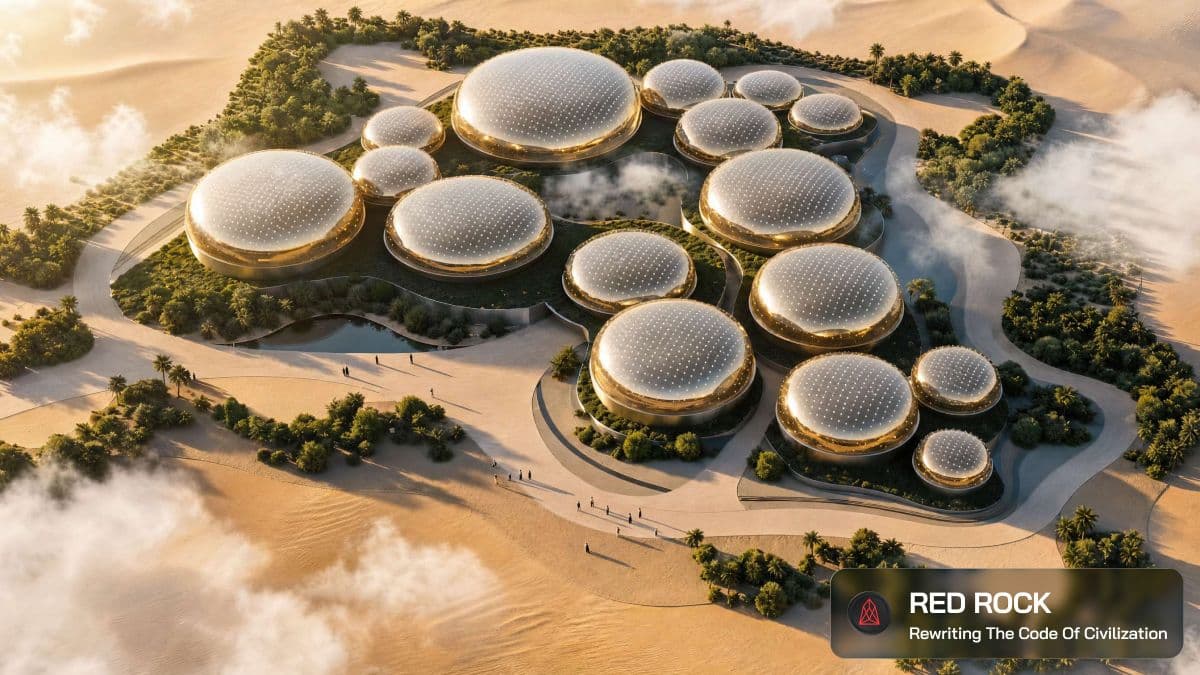
When these systems align, entirely new industries emerge. The UAE has already demonstrated this principle with ports, aviation, logistics, and digital infrastructure. The next frontier may be something even more fundamental: the industrialization of food production in desert environments, powered by clean energy and engineered for resilience.
And when energy efficiency crosses the critical threshold, when production systems reach less than 3 kWh per kilogram, controlled-environment agriculture stops being a sustainability experiment. It becomes a strategic asset.
The future of food will not simply be grown. It will be engineered. And in many ways, that future is already being built in the UAE.
Red Rock is actively developing food security infrastructure systems for institutional and national-scale deployment. If you are working on projects at this intersection of energy, technology, and food sovereignty, we would like to hear from you.
Recent Posts
September 10, 2026
July 7, 2026
May 25, 2026
May 18, 2026
April 26, 2026
Related Posts
September 10, 2026
May 25, 2026
March 20, 2026
March 18, 2026
March 12, 2026
 Email
Email Location