
When Food Becomes a Right

Red Rock Editorial Team

March 12, 2026

Last Updated on March 12, 2026

9 min read
The Red Rock Editorial Team sits down with Chairman Riccardo Ammendola to explore the civilizational vision behind Seedelligence, and why the next great infrastructure era has already begun.
There is a question that Riccardo Ammendola says he returns to often. Not in boardrooms, and not in investor presentations. Quietly, he says, the way you return to a thought that refuses to leave you alone.
"What is the most fundamental thing a government owes its people?"
He pauses before continuing. "Not money. Not freedom, even. Food. The ability to eat. Everything else, stability, productivity, civilisation itself, rests on that single foundation. And for the entirety of human history, we have never been able to guarantee it."
He believes that is about to change.
The conversation we have not yet had
Much of the public debate around automation and artificial intelligence circles around one idea: Universal Basic Income. The notion that as machines replace human labour, governments will need to provide citizens with a financial floor, a guaranteed sum to sustain life in an economy that no longer needs everyone to work.
Ammendola respects the idea. But he thinks we are skipping a step.
"Before you give people money," he says, "you give them food. Because money is abstract. Food is not. If a government can guarantee that every citizen has access to nutritious, consistently produced food, regardless of climate, geography, supply chain disruption or geopolitical tension, that is a more powerful social contract than any financial transfer."
He is describing something that has no widely accepted name yet. He calls it, simply, Universal Food Security. Not food aid. Not subsidy. Infrastructure. The same way we built electrical grids and water systems and public health networks, engineered guarantees, woven into the fabric of society.
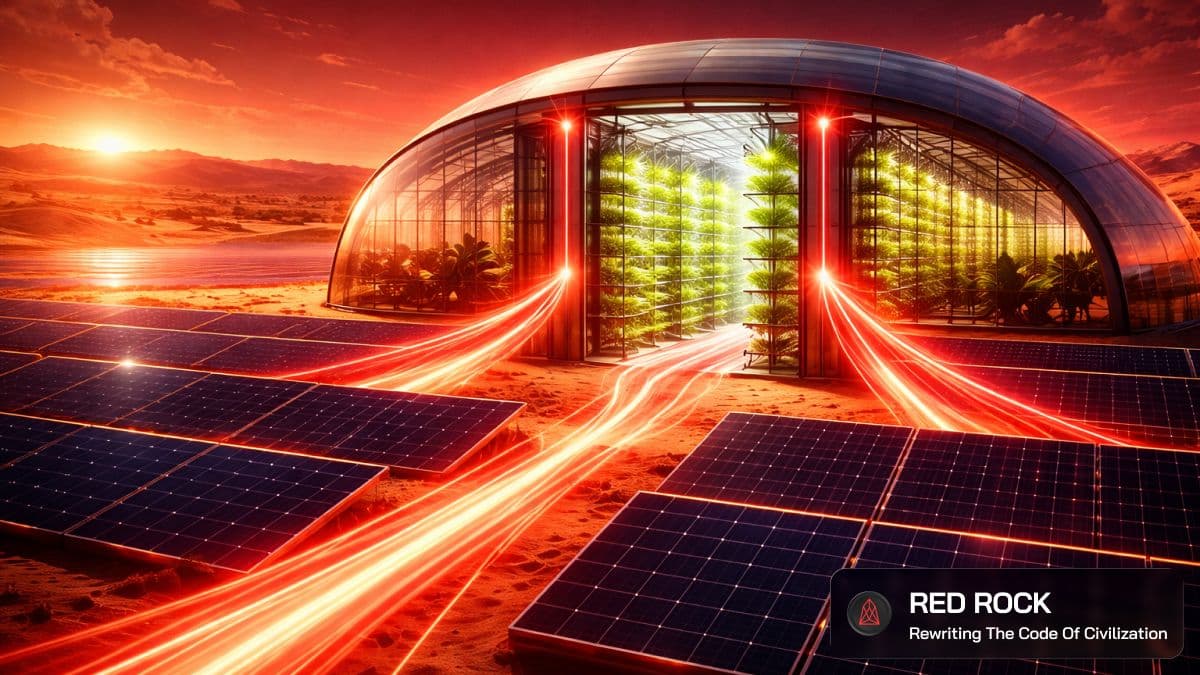
"We are not far from the moment," he says, "when a government can point to a facility and say: this produces food for one million people, autonomously, with 95% less water than conventional agriculture, every day of the year, regardless of what is happening outside. That is not a farm. That is infrastructure."
The technology that makes the threshold possible
What changed? Why now, and not twenty years ago?
Ammendola's answer is precise. It is not one technology, he explains. It is the convergence of several, each mature enough on its own, but transformative in combination.
Artificial intelligence that can monitor, model and adjust an entire agricultural environment in real time. Robotics capable of handling every physical stage of production without human intervention. Closed-loop systems for water and energy that make these facilities viable in the most resource-scarce environments on Earth. And controlled-climate architecture that removes weather, season and geography from the equation entirely.
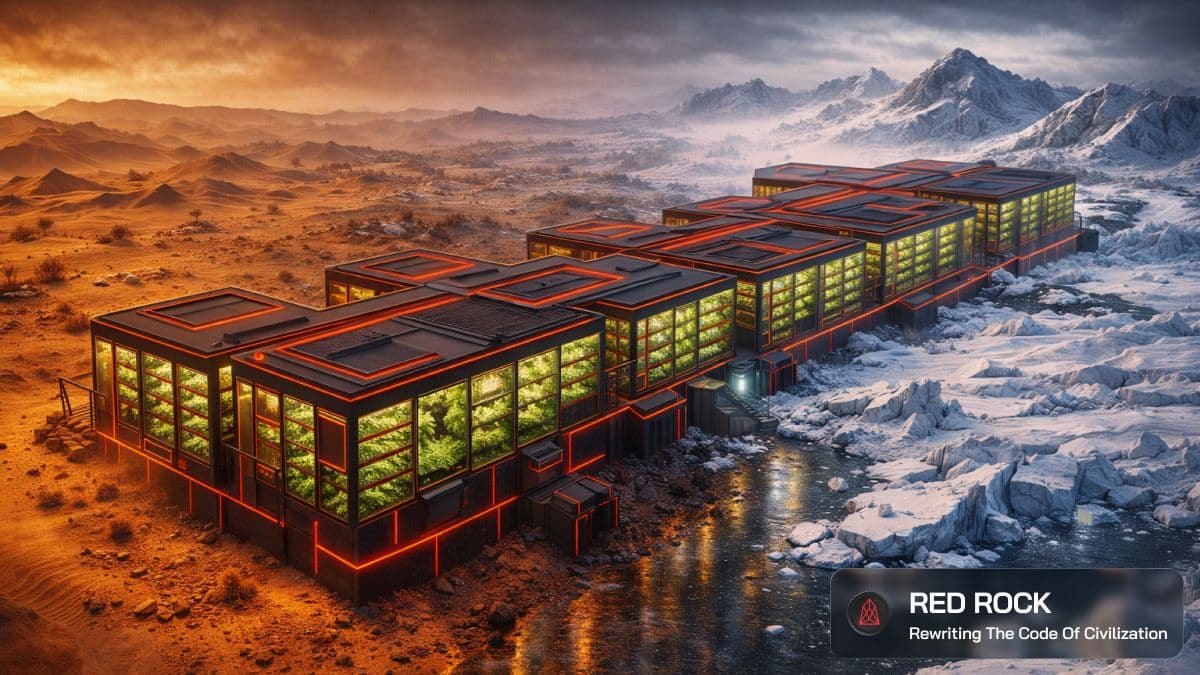
"For the first time in history," he says, "we can produce food anywhere. Desert. Arctic. Urban centre. Underground. The constraint is no longer the land or the climate. The constraint is whether you have the infrastructure."
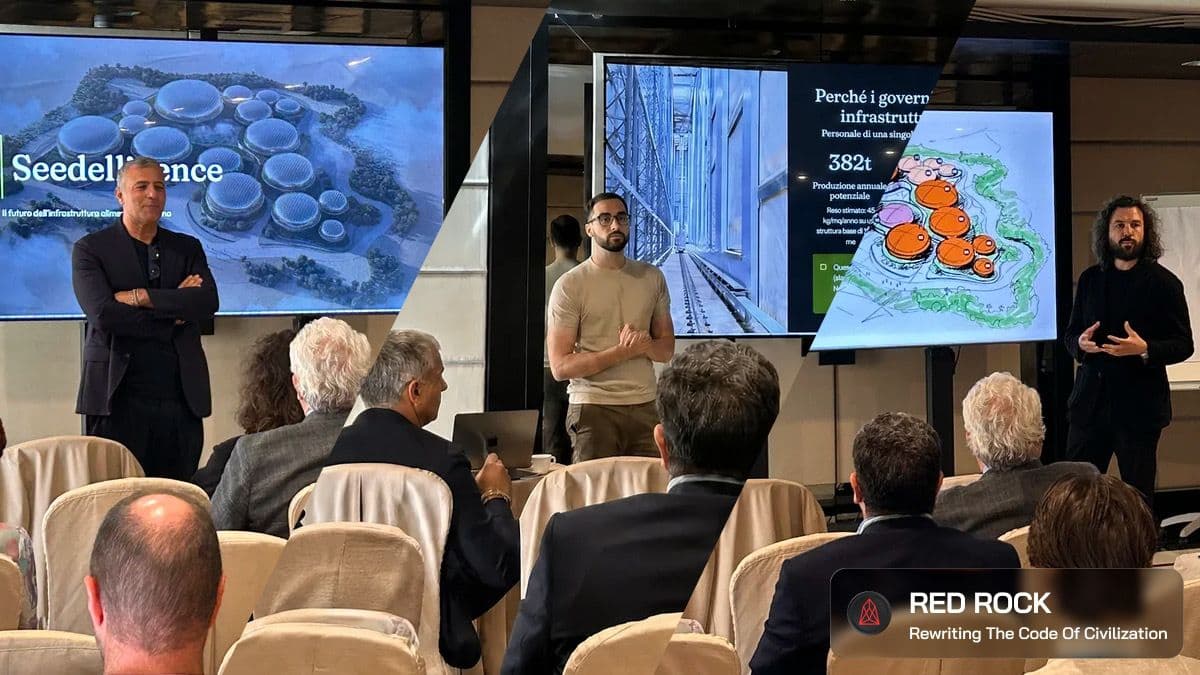
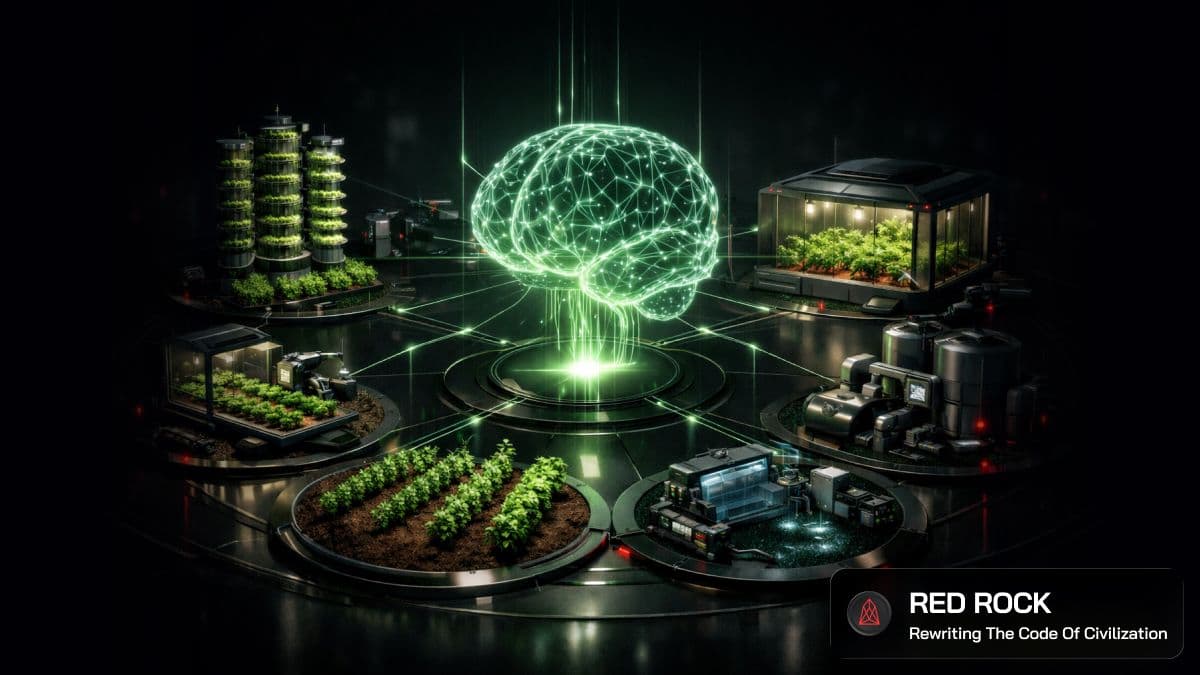
This is the foundation of Seedelligence, the proprietary AI architecture that Red Rock is developing as the operational brain of its food infrastructure platform. Unlike conventional agricultural systems where different technologies operate in parallel but separately, Seedelligence is designed as a unified intelligence: one system that sees the entire facility as a single organism and governs every variable simultaneously.
"Seedelligence does not operate farms," Ammendola says carefully. "It builds the infrastructure that makes sovereign food systems possible. The distinction matters enormously. We are not in the business of growing food. We are in the business of building the systems that allow nations to grow their own."
The energy analogy
To explain the scale of what he believes is coming, Ammendola reaches for a comparison that he returns to repeatedly throughout the conversation.
"For the last fifty years, nations have invested trillions in energy infrastructure. Pipelines, power stations, grids, renewables. Because they understood that energy sovereignty was strategic, that a nation which could not control its own energy supply was vulnerable in ways that went far beyond economics."
He lets the parallel form in silence before completing it.
"The next strategic infrastructure after energy will be food. Seedelligence is building it."
He is not speaking metaphorically. The business model that Red Rock is constructing around Seedelligence is explicitly modelled on infrastructure development, design, engineering, technology integration and long-term platform licensing, not on agricultural operations. The clients he envisions are governments, sovereign wealth funds and strategic infrastructure operators. The projects are measured not in hectares but in national productive capacity.
"When a government commissions an energy facility," he says, "they are not buying electricity. They are buying independence. That is exactly what food infrastructure provides. And the market for that, once governments fully understand what is now technically possible, is enormous."
Civilisational insurance
There is a phrase Ammendola uses that stays with you: civilizational insurance.
He uses it to describe what advanced food infrastructure represents in a world of accelerating instability, climate disruption, geopolitical fragmentation, supply chains that proved, during the pandemic years, to be far more fragile than anyone had admitted.
"A nation that can produce its own food autonomously, at scale, regardless of external conditions, has something that cannot be sanctioned, cannot be disrupted, cannot be taken away. It has food sovereignty. And food sovereignty, in the 21st century, is one of the most powerful forms of strategic resilience a government can possess."
He is building, he says, not for the world as it is, but for the world as it is becoming.
Beyond Earth
And then he says something that reframes everything that came before.
"We are building these systems for the most hostile environments our planet has to offer. Deserts. Arid regions. Places where conventional agriculture simply cannot function. But as we do that, we are realizing something. The same technology that feeds a city in the desert will one day feed a settlement on another world."
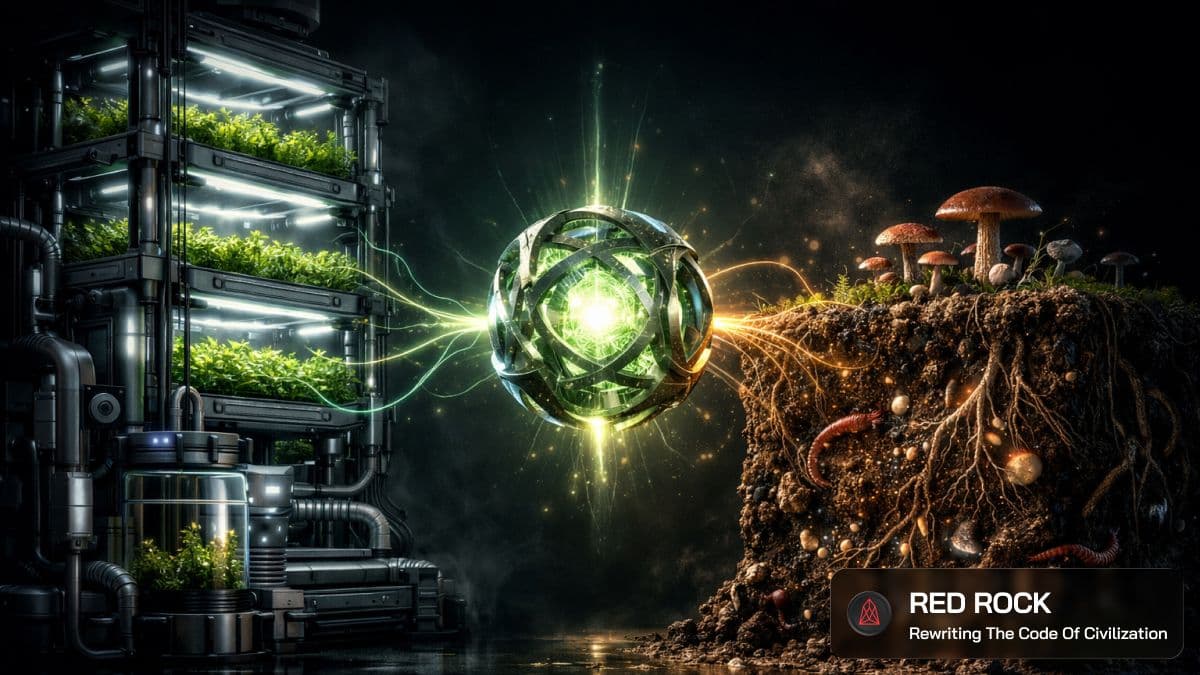
The autonomous systems being developed for Seedelligence, closed-loop ecosystems, AI-governed environments, robotic agricultural operations that require no human labour, are architecturally identical to what any permanent human settlement on the Moon or Mars will require. Not as a distant aspiration, but as an engineering inevitability.
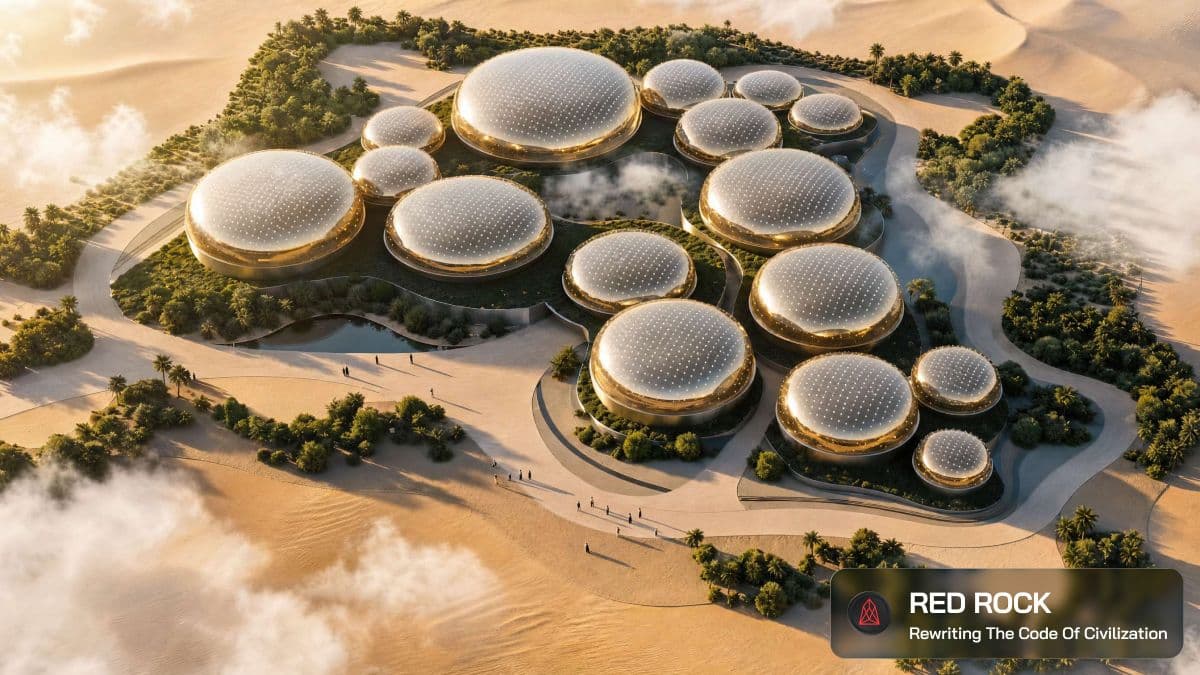
"The first people who live on Mars will not be able to wait for a supply ship," he says quietly. "They will need to produce their own food, autonomously, in an environment that is trying to kill them. The infrastructure we are building today, in the deserts of the UAE, is the direct technological ancestor of the systems that will make that possible."
Red Rock describes the Institute as the first terrestrial proving ground for extra-terrestrial food infrastructure. It is a description that Ammendola does not offer lightly.
The mission beneath the mission
We end where we began, with the question of what a government owes its people. But by now the frame has shifted. The question is no longer only about governments. It is about civilisation itself, and what this generation chooses to build.
"The technology exists," Ammendola says. "The engineering is not theoretical. What remains is the decision, the collective decision, to treat food security the way we treated electrification a century ago. As infrastructure. As a right. As something we build, permanently, for everyone."
He pauses one final time.
"We have spent centuries trying to solve hunger through politics and aid and distribution. Those efforts matter. But the permanent solution was always going to be technological. It was always going to require building systems so efficient, so autonomous and so resilient that hunger becomes, for the first time in human history, a choice, not a condition."
"That is what we are building. And we believe it is some of the most important work of our time."
Riccardo Ammendola is Chairman of Red Rock Technology. Seedelligence is the proprietary AI infrastructure platform developed by Red Rock Technology FZ-LLC in the UAE.
If you represent a government, sovereign wealth fund, or strategic infrastructure operator and want to understand what food sovereignty infrastructure looks like in practice, get in touch with the Red Rock team.
Recent Posts
September 10, 2026
July 7, 2026
May 25, 2026
May 18, 2026
April 26, 2026
Related Posts
September 10, 2026
May 25, 2026
March 20, 2026
March 18, 2026
March 9, 2026
 Email
Email Location