
How We Leverage AI to Build Faster, Smarter, and More Secure Software

Hamid Firoozian (CTO)

February 28, 2026

Last Updated on February 28, 2026

4 min read
At Red Rock, AI is not a marketing statement. It is part of our daily engineering workflow. We integrate advanced Large Language Models (LLMs) directly into our development lifecycle to improve speed, quality, and security in measurable ways.
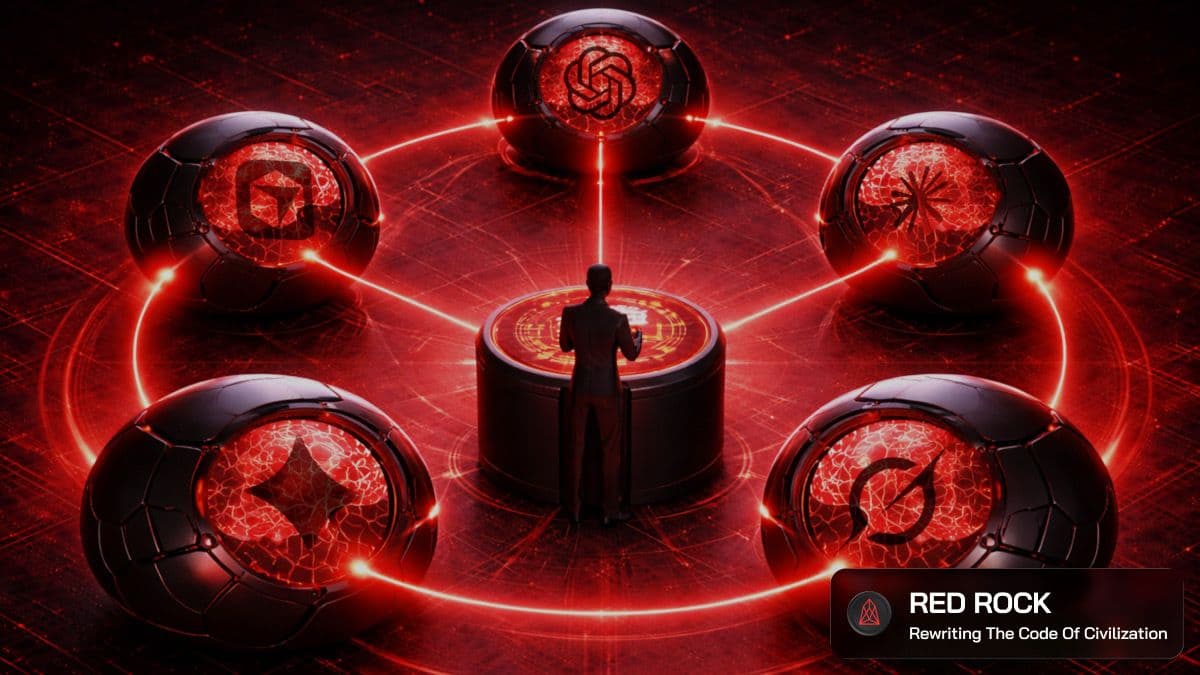
We currently use Claude, ChatGPT, Gemini, Grok, and Cursor as our AI-assisted IDE. Each tool has a distinct role in our workflow.
How We Use Each AI Tool
Claude: Engineering Logic, Patterns and Testing
Claude is primarily used for finding implementation patterns, refining complex business logic, generating structured unit and integration tests, and reviewing architectural trade-offs.
Concrete example: When building a new NestJS microservice, initial scaffolding, structure validation, and test coverage planning previously took around 2 hours. With Claude assisting in pattern validation and test generation, this process now typically takes 20 to 30 minutes, with improved test completeness.
Claude is particularly effective when we need structured reasoning around architecture or when comparing implementation strategies.
ChatGPT and Grok: Research, R&D and Technical Exploration
We primarily use ChatGPT and Grok for research and development tasks, technology comparison, protocol exploration, rapid technical investigations, and documentation drafting.
Concrete example: During evaluation of two different message broker architectures for a distributed system, we used ChatGPT and Grok to quickly summarize performance trade-offs, scaling behaviors, and failure modes. What would normally require several hours of manual research across documentation was reduced to under one hour of structured comparison, accelerating our architectural decision process.
They are especially useful for accelerating early-stage exploration before engineering decisions are finalized.
AI-Assisted Architecture Design
In early design phases, we often consult AI models to draft possible system architectures, validate service boundaries, suggest scaling strategies, and identify potential bottlenecks.
Final architecture decisions are always reviewed and approved internally by senior engineers. AI accelerates the thinking process. It does not replace engineering ownership.
Cursor: Day-to-Day Implementation Acceleration
Cursor plays a major role in daily development. We use it for code generation aligned with our internal standards, refactoring assistance, boilerplate reduction, and rapid iteration within large repositories.
Once architectural direction is finalized, we train our internal agents and prompts to strictly follow our folder structures, naming conventions, and service patterns. This ensures that AI-generated code aligns with our engineering doctrine rather than introducing inconsistency.
AI in Code Review and Quality Control
AI is integrated into our development workflow through pre-PR validation assistance, test generation before pull request submission, pattern conformity checks, and security best-practice verification.
While we do not delegate final approval to AI, our tools assist developers before opening pull requests, significantly reducing review cycles and improving code quality before human inspection.
Measurable Benefits We Experience
By integrating AI into our workflow, we achieve significant reduction in scaffolding time of up to 70 to 80 percent in some cases, faster architectural research and comparison, more comprehensive test coverage, reduced repetitive engineering tasks, and cleaner and more standardized code structure.
Most importantly, AI enables our engineers to focus on high-value architectural and business logic challenges rather than boilerplate work.
Human Oversight Remains Central
AI is a productivity multiplier, not an autonomous decision-maker. Every AI-generated output is reviewed by experienced engineers, tested rigorously, aligned with our internal coding standards, and evaluated for security implications.
We combine AI acceleration with disciplined engineering governance. That combination is what allows us to deliver software that is not only faster to build, but also robust, secure, and production-ready.
If you want a team that uses AI as a structural advantage and not just a buzzword, get in touch with the Red Rock team.
Recent Posts

September 10, 2026

July 7, 2026
May 25, 2026
May 18, 2026
April 26, 2026
 Email
Email Location