
Software Engineering as a Service: Why the Best Companies No Longer Hire Engineers
Red Rock Editorial Team

February 20, 2026

Last Updated on February 20, 2026

7 min read
There is a moment every founder knows. The product vision is clear. The market window is open. The investors are watching. And the engineering team is still three months away from being assembled.
That gap, between strategic clarity and technical execution, is where companies lose races they were built to win.
The traditional hiring process was not designed for this reality. It was designed for a world where time was abundant, talent was local, and competition moved slowly. None of those conditions exist anymore.
Software Engineering as a Service exists because that world no longer does.
The Problem With Hiring Engineers
Hiring is not a neutral act. It consumes months of leadership attention, generates dependency on recruiters, creates legal and HR infrastructure that scales costs before it scales output, and introduces turnover risk at the worst possible moment. More importantly: hiring optimizes for filling a role. What a company actually needs is to activate a capability. These are not the same thing. A hired engineer is a fixed cost tied to a fixed output. An activated capability is a modular system: deployable, scalable, governable, that moves in alignment with business velocity, not in spite of it. This distinction is the structural foundation of the SEaaS model.
What Software Engineering as a Service Actually Is
SEaaS is not outsourcing. It is not freelancing. It is not a staffing agency with better branding. It is a capability activation model. When a company activates SEaaS through Red Rock, it integrates a fully operational engineering system: pre-trained, performance-governed, and operationally managed, directly into its product execution layer. The engineers operate as internal team members, embedded in the company's workflows, aligned to its decision-making rhythm, and accountable to its delivery standards. What remains outside the company is everything that slows it down: HR overhead, compliance management, performance frameworks, operational governance. Red Rock holds that layer. The company receives only the output. This is the inversion that makes the model structurally superior to traditional hiring at speed.
The Modular Architecture of Execution
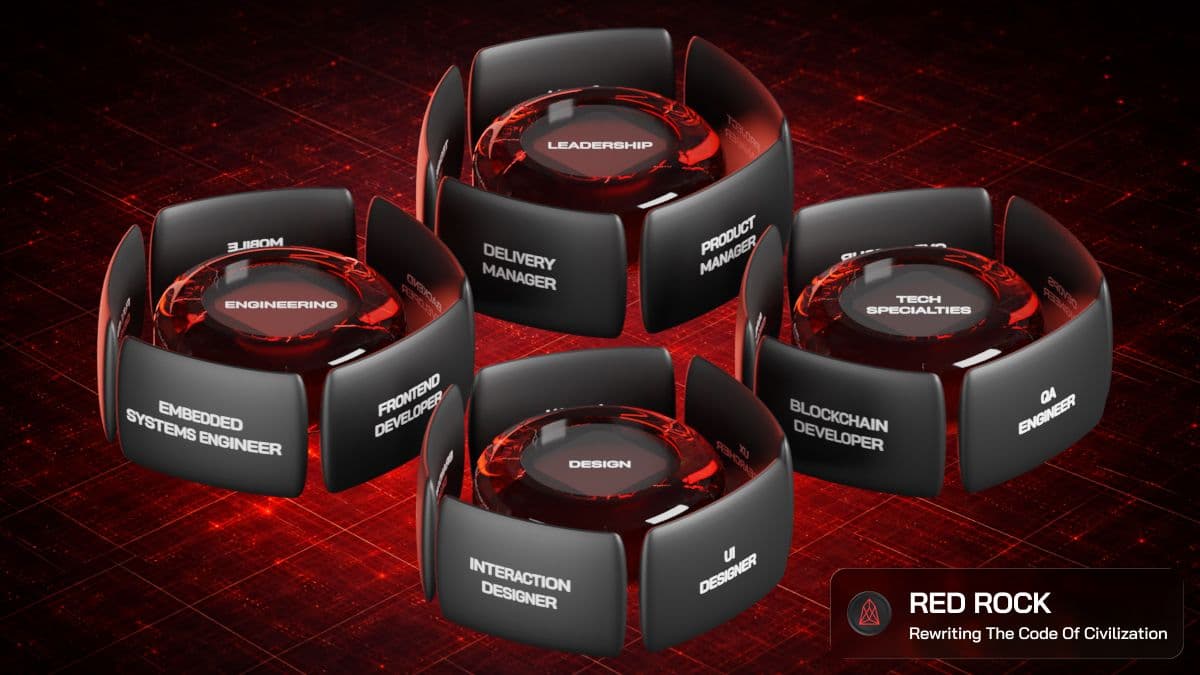
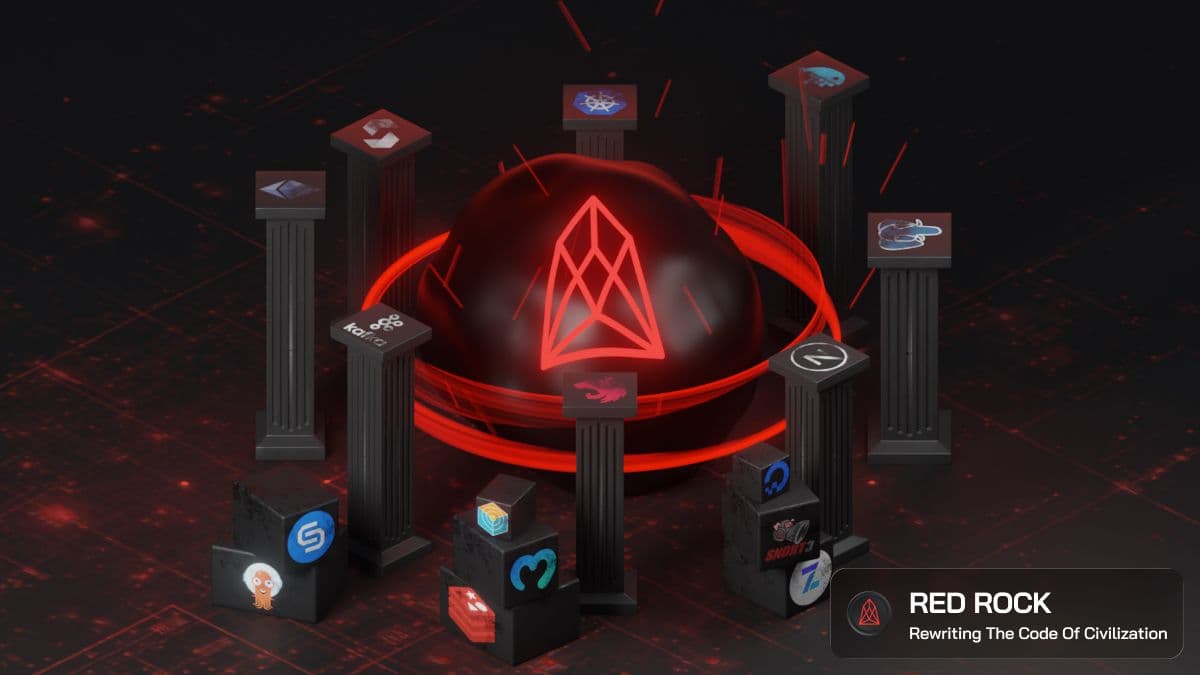
Not every company needs the same engineering surface area. This is why the Red Rock SEaaS model is built on modular capability layers, each independently activatable, each fully integrated into a coherent engineering system. A company in early product definition activates experience architecture and pre-engineering design before writing a single line of code. A company scaling its platform activates distributed systems architecture and AI-augmented engineering. A company entering regulated markets activates cybersecurity and infrastructure protection. A company managing multiple engineering teams activates product and technical governance. The activation sequence follows the business, not a predefined package. No fixed menus. No rigid bundles. Capabilities are deployed in the order that generates the most value at each stage of growth. This modularity is not a commercial convenience. It is a structural principle: engineering should be as dynamic as the business it serves.
What Changes When You Stop Hiring and Start Activating
The first change is speed. Without the recruitment cycle, onboarding lag, and ramp-up period, execution begins in days rather than months. The market window that was closing stays open longer. The second change is clarity. Working alongside a team that operates with discipline and governance forces organizational clarity. Founders begin to see which roles they actually need, which processes were always broken, which decisions were being deferred because no one owned them. A high-performance engineering system does not just accelerate product development, it elevates the strategic precision of everyone working alongside it. The third change is optionality. A modular capability model scales up and down with business reality. Headcount does not. In an environment where capital efficiency is a competitive advantage, the ability to activate exactly the engineering power you need and release it when the phase is complete, is structurally valuable in ways that a permanent hire never is.
Who This Model Is Built For
SEaaS is not for every company. It is not for those looking to reduce costs by outsourcing responsibility. It is not for those who want a pool of developers to direct like task executors. It is for founders who understand that speed is the real competitive currency. For decision makers who have seen what happens when engineering falls behind strategy. For companies entering a phase of expansion that requires execution infrastructure they cannot build fast enough on their own. It is for those who intend to win and understand that winning requires being ready before the opportunity fully materializes.
The Architecture Behind the Delivery
Every engineer activated through Red Rock operates within a system, not as an isolated resource. Red Rock's engineering standards, performance governance, and organizational frameworks are the invisible infrastructure that makes individual output consistently reliable. This is the difference between accessing talent and accessing a system. Talent is variable. Systems are governable. When a company activates SEaaS, it is not hiring a person. It is integrating a production-grade engineering system into its own operational structure. The output is predictable because the system behind it is designed for predictability. This is what institutional-grade delivery looks like at the capability layer.
The Race Against Time
In the end, every product decision is a time decision. Every week without engineering execution is a week the competition uses. Every month spent on recruitment is a month someone else spends shipping. Red Rock exists to eliminate that gap, not by providing developers, but by activating the technical power required to move at the speed the market demands. If your product is ready to move faster than your current engineering structure allows, the next step is a conversation.
Contact the Red Rock team and activate your first capability layer.
Recent Posts

September 10, 2026

July 7, 2026
May 25, 2026

May 18, 2026

April 26, 2026

 Email
Email Location