
The UAE's Sovereign Food Infrastructure Race: Where Seedelligence Stands

Red Rock Editorial Team

September 10, 2026

Last Updated on September 10, 2026

13 min read
The United Arab Emirates is not experimenting with food sovereignty. It is systematically building it.
Driven by the National Food Security Strategy 2051 and an import dependency that sits somewhere between 85 and 90 percent depending on the measure used, the UAE has become one of the most concentrated deployment zones for advanced agricultural infrastructure anywhere outside the United States and the Netherlands.
The evidence is concrete. A 40 million dollar world record vertical farm already operational in Dubai. A 680 million dollar joint venture programme announced in Abu Dhabi. A 900,000 square foot GigaFarm under construction at a government master development. Capital is moving. Government mandates are active. The infrastructure layer is being built now.
What does not yet exist in this landscape is a sovereign grade, AI driven seed and food infrastructure platform with institutional ownership architecture. That is the gap Seedelligence is designed to occupy.
This article maps who is actually operating in the space, at what scale, and where the strategic opening sits.
The numbers behind the opportunity
The UAE imports the large majority of its food, commonly cited between 85 and 90 percent
Ministry of Climate Change and Environment statistics put the number of operating farms in the UAE at around 38,000
BlueWeave Consulting projects the UAE vertical farming market at 358.9 million dollars by 2031, from 92.4 million dollars in 2024
Data Bridge Market Research projects the Middle East and Africa vertical farming market at roughly 6.2 billion dollars by 2030
Hydroponic and controlled environment systems in the region report water savings in the range of 90 to 95 percent against conventional field farming
Strategy horizon: 2051
Market estimates in this sector diverge sharply between research houses, which is itself a signal: the category is being defined in real time, not measured against a settled baseline.
Tier 1: mega scale and institutional
State backed or institutionally capitalised. Operational or under funded construction. These projects validate government appetite and market scale.
Bustanica, Emirates Flight Catering and Crop One, Dubai
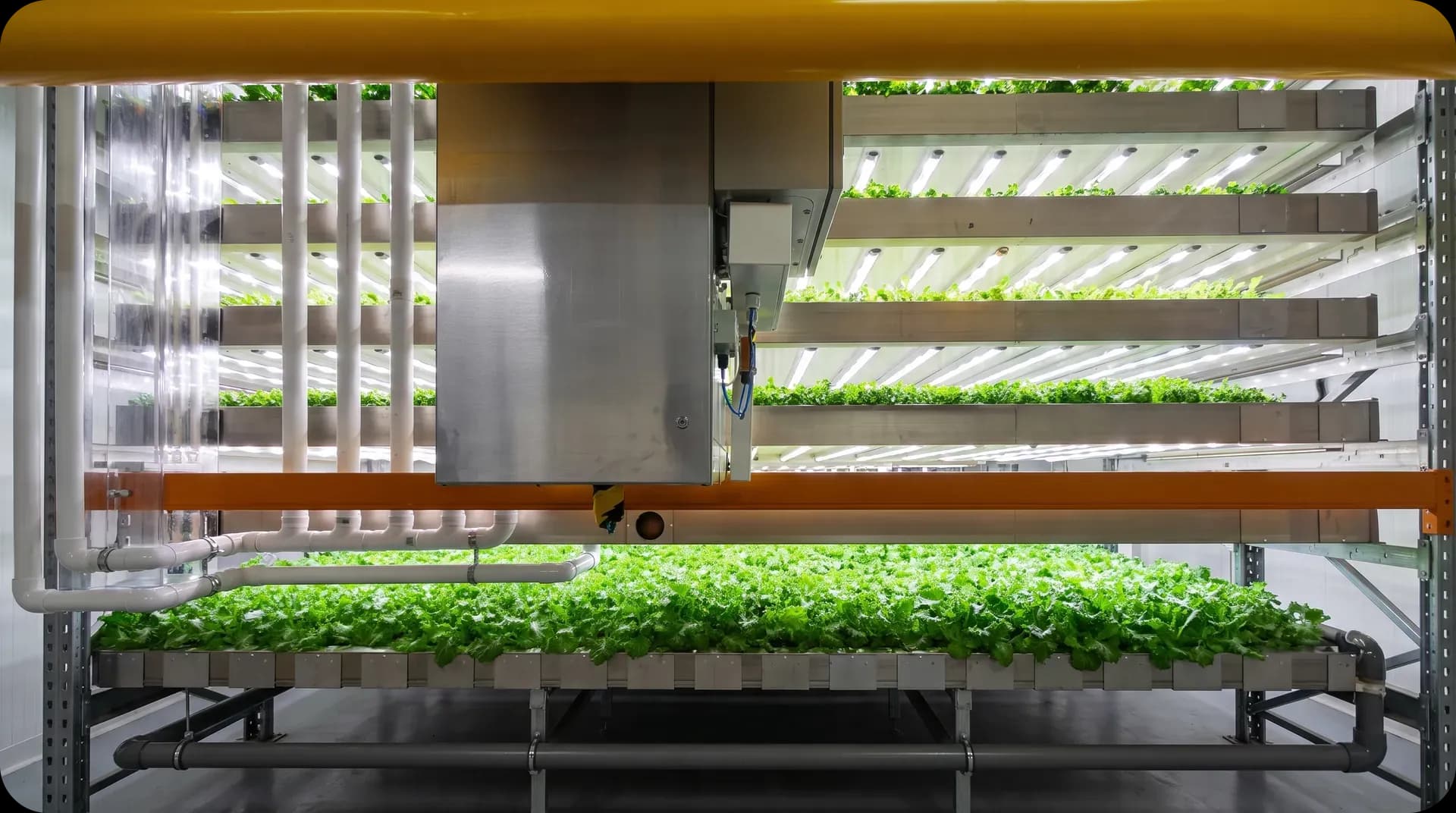
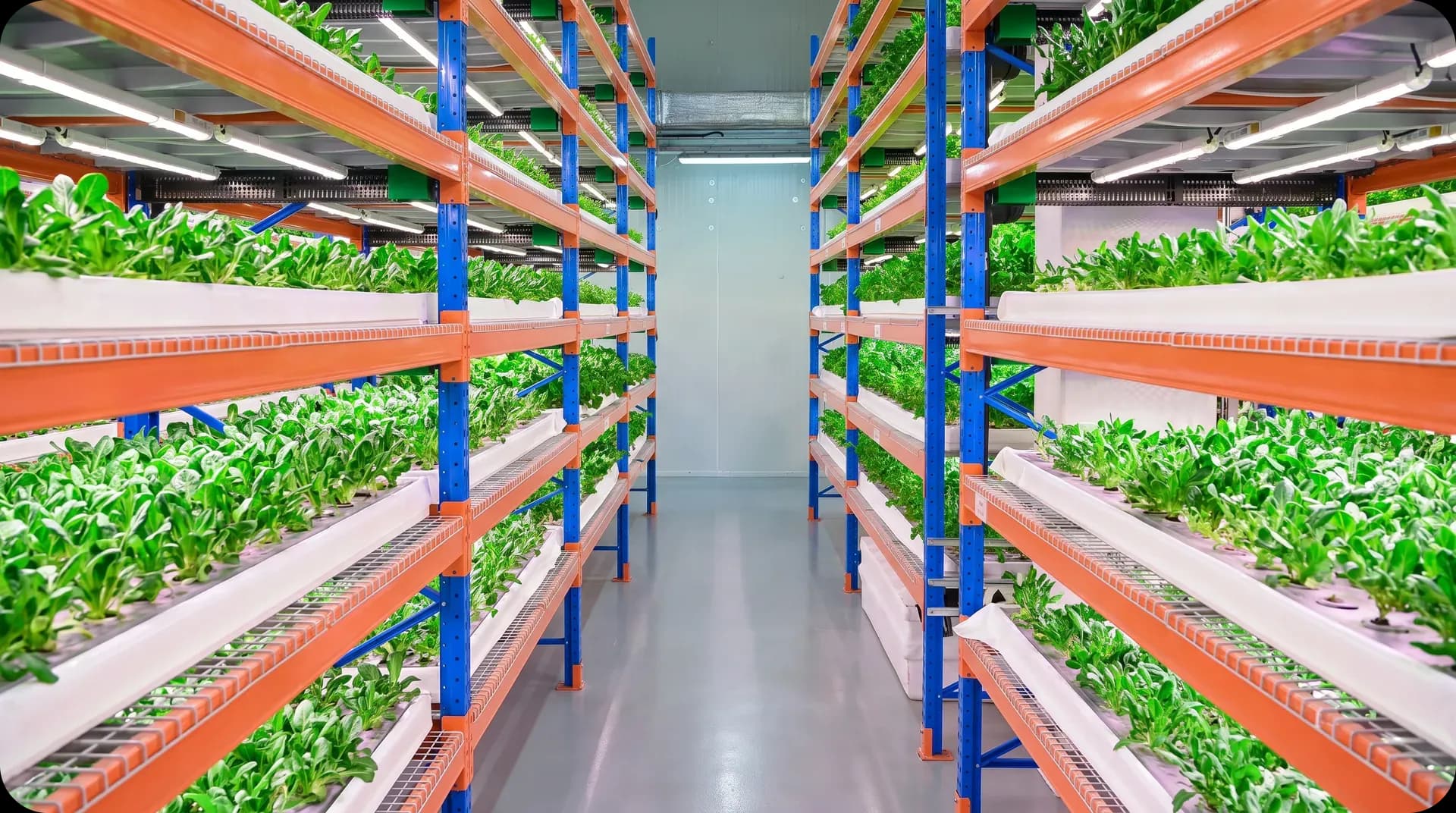
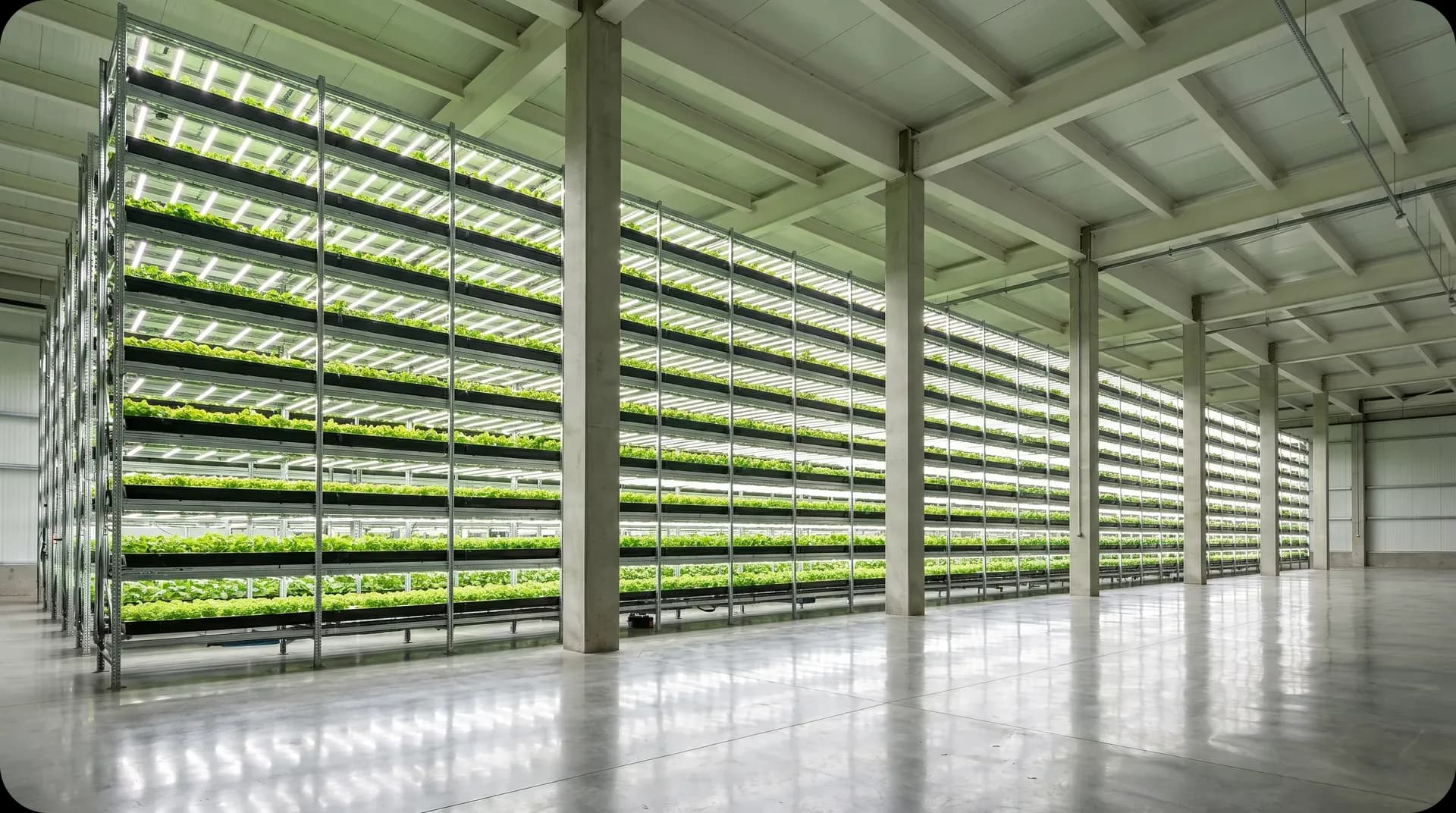
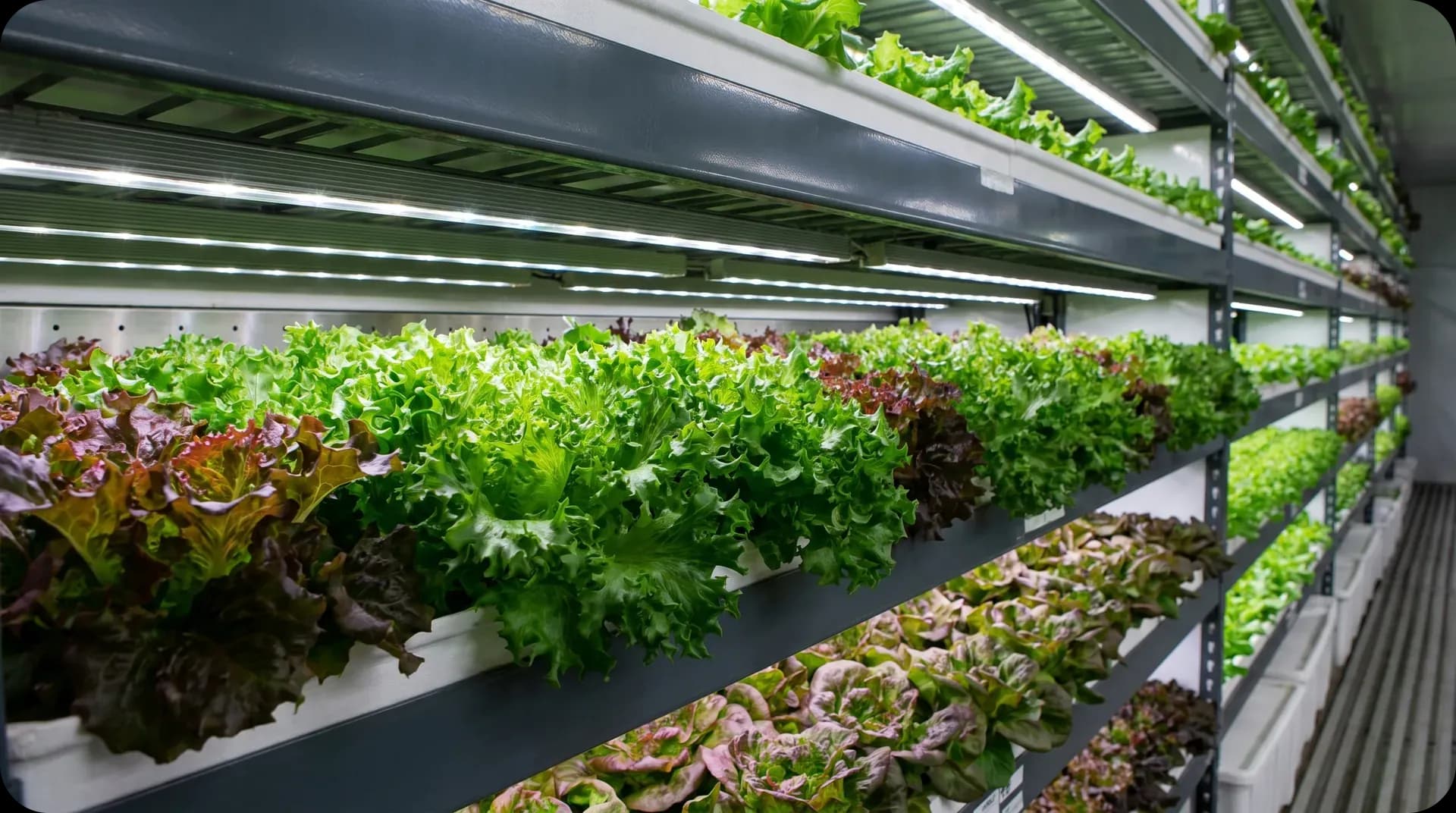
The current global benchmark. A 330,000 square foot facility backed by a 40 million dollar investment, located near Al Maktoum International Airport, designed to produce more than 1 million kilograms of leafy greens annually while using 95 percent less water than conventional agriculture. The original joint venture was subsequently fully acquired by Emirates Flight Catering, making it a wholly UAE owned operation. Primary off take runs through the Emirates group. More at bustanica.ae and in the Emirates media centre release.
Signal: UAE institutional capital and government will back world scale food infrastructure. The anchor client model, where a sovereign scale off taker is also the owner, is a structurally relevant template.
GigaFarm, ReFarm Global and IGS, Food Tech Valley
A 900,000 square foot development at Food Tech Valley, a UAE government led initiative delivered in partnership between the Ministry of Climate Change and Environment and Wasl, capable of growing more than three million kilos of produce annually using AI driven vertical farming technology, and designed to recycle more than 50,000 tonnes of food waste and grow two billion plants each year. IGS confirmed in 2026 that the first phase of construction at the site would be completed. Details in the IGS construction update and at Food Tech Valley.
Signal: Plant volume at national scale is now a recognised strategic objective, not a research topic. Two billion plants a year is a propagation and input problem before it is a growing problem. That is upstream territory.
Plenty and Mawarid, Abu Dhabi
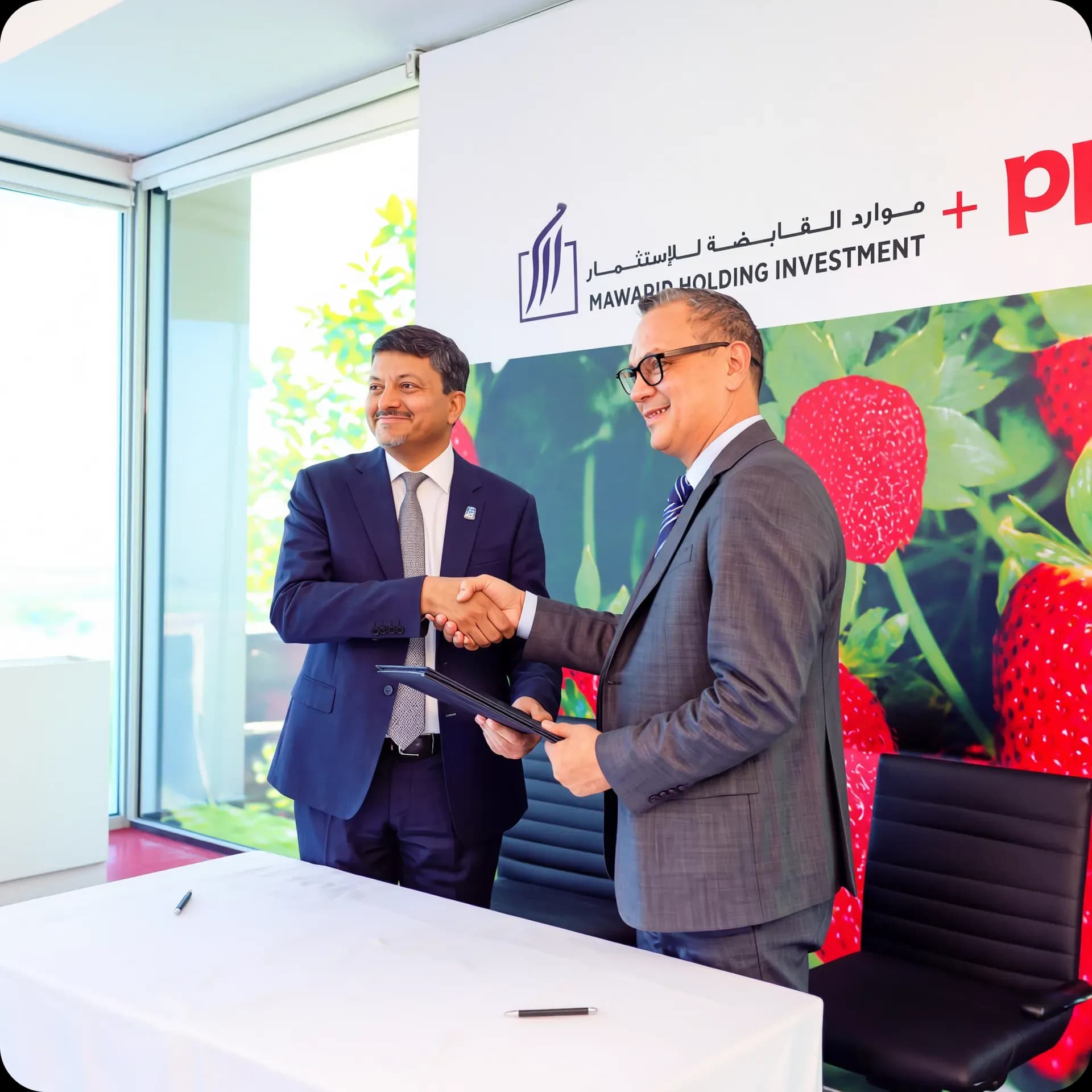
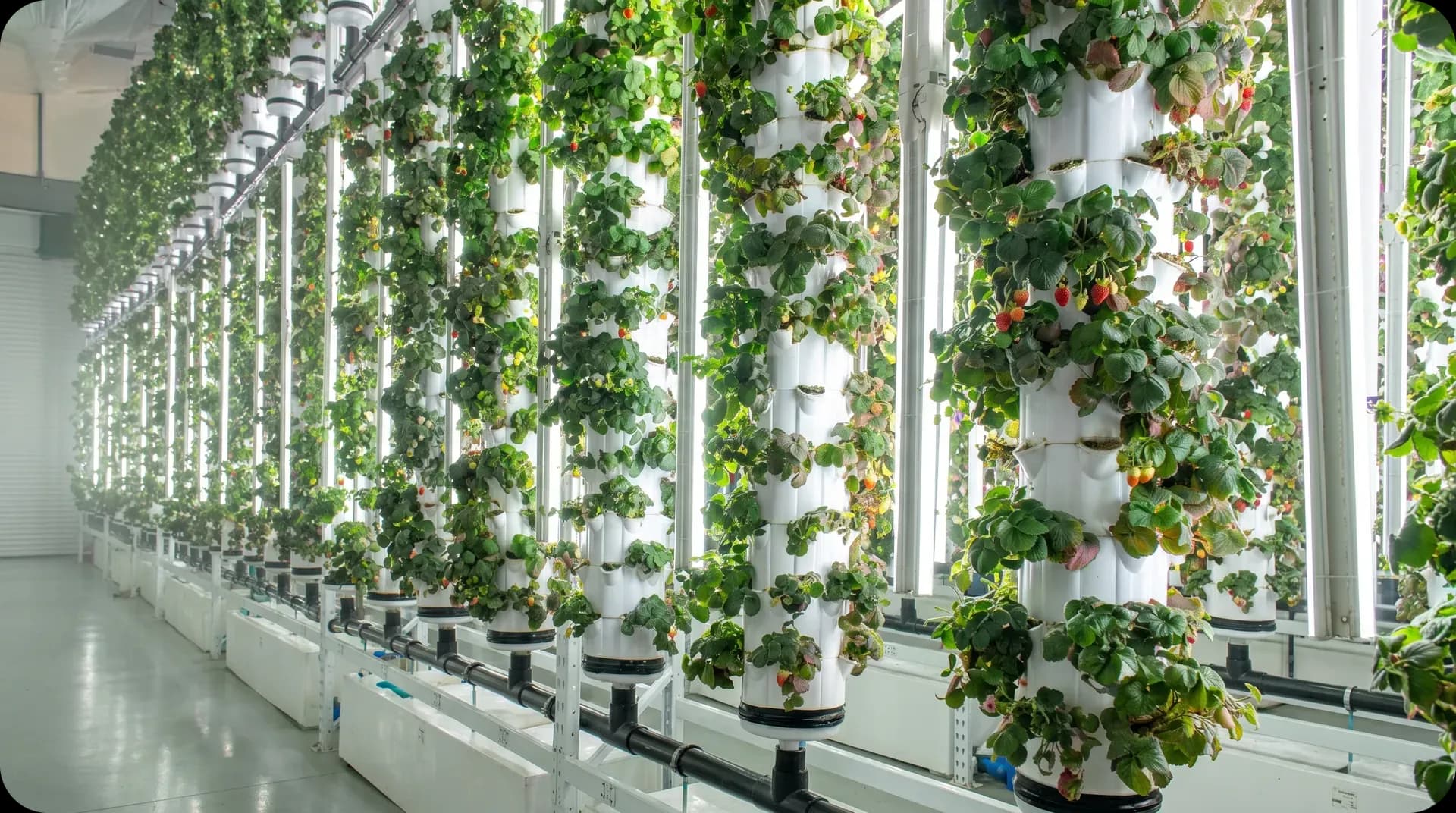
Announced in July 2024 as an exclusive multi year regional partnership between Plenty Unlimited and Mawarid Holding Investment, a subsidiary of Alpha Dhabi Holding, with more than 500 million dirhams, around 130 million dollars, committed to a first Abu Dhabi indoor farm designed for more than 2 million kilograms of strawberries annually, inside a five farm programme valued at up to 2.5 billion dirhams, around 680 million dollars, over five years. See the announcement.
The programme also illustrates the risk profile of the production company model. Plenty entered Chapter 11 proceedings in 2025, stating it would continue operating its Richmond, California strawberry farm and its Wyoming research facility, and refocus on the premium strawberry market, before exiting the Chapter 11 process later that year.
Signal: GCC capital allocators at sovereign wealth and family office level are actively seeking agricultural infrastructure exposure. At the same time, capital intensity in production assets is unforgiving. Restructuring risk sits with whoever owns the greenhouse, not with whoever owns the upstream layer.
AeroFarms AgX, Abu Dhabi
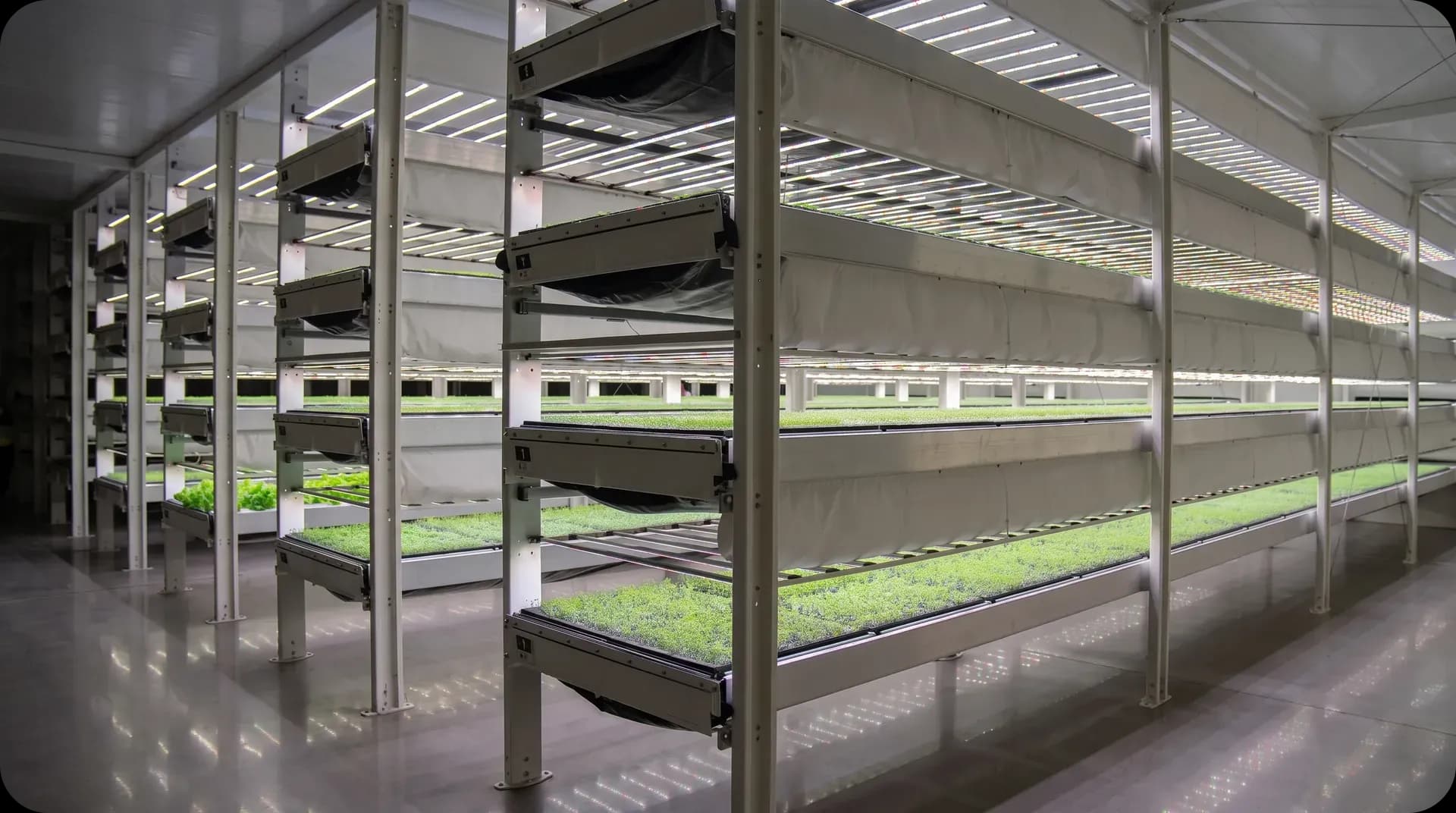
At 65,000 square feet, AgX is the largest indoor vertical farm of its kind dedicated to research and development in the world, supported by the Abu Dhabi Investment Office as part of its goal to advance next generation agriculture in arid and desert environments. More in the AeroFarms announcement.
Signal: Arid climate agricultural intellectual property is itself a strategic export asset. The UAE is building exportable sovereignty frameworks, not simply importing technology.
Tier 2: commercially established
Operationally active, generating revenue, in expansion mode. These players define the competitive floor.
Pure Harvest Smart Farms, Abu Dhabi
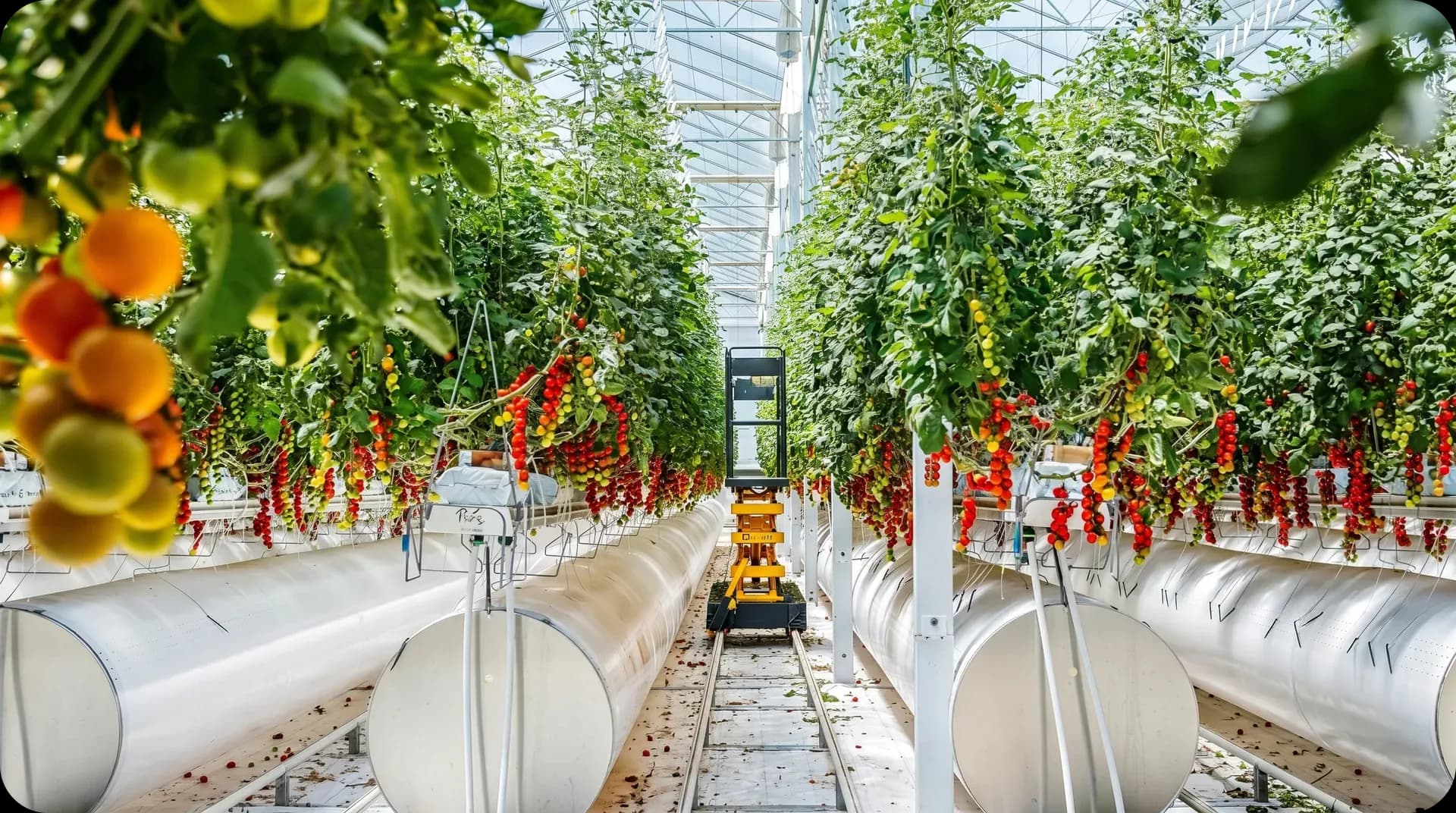
The most commercially mature local operator. A 180.5 million dollar growth round in 2022, backed by Metric Capital Partners, IMM Investment Corp and Olayan Group, took total capital raised to 387.1 million dollars, placing it among the best funded companies in the region. The company operates multiple climate controlled farms across the UAE, Saudi Arabia and beyond. Full release here.
Signal: Serious institutional capital is available to UAE agri-tech. It also shows the ceiling of the production company model: high capital intensity, retail margin pressure, no upstream moat.
ADQ AgTech Park and the ZERO project, Abu Dhabi
ADQ launched the operational phase of its AgTech Park with a vertical farming project delivered with ZERO, retrofitted into a 1,000 square metre warehouse at proof of concept stage. At full scale, the 200 hectare park targets more than 40 kilotons of fresh produce annually, accounting for up to 6 percent of UAE total consumption and 12 percent of imports for the crops grown within the park. See the ADQ newsroom.
Signal: Sovereign wealth vehicles are not passive observers. They are building. The strategic question for any serious entrant is whether to position as a government contractor or as a sovereign infrastructure partner co-architecting the national framework. The second is structurally more defensible.
Tier 3: specialist operators
Niche operators targeting specific verticals, commercially active, with limited scale ambition and no institutional infrastructure mandate.
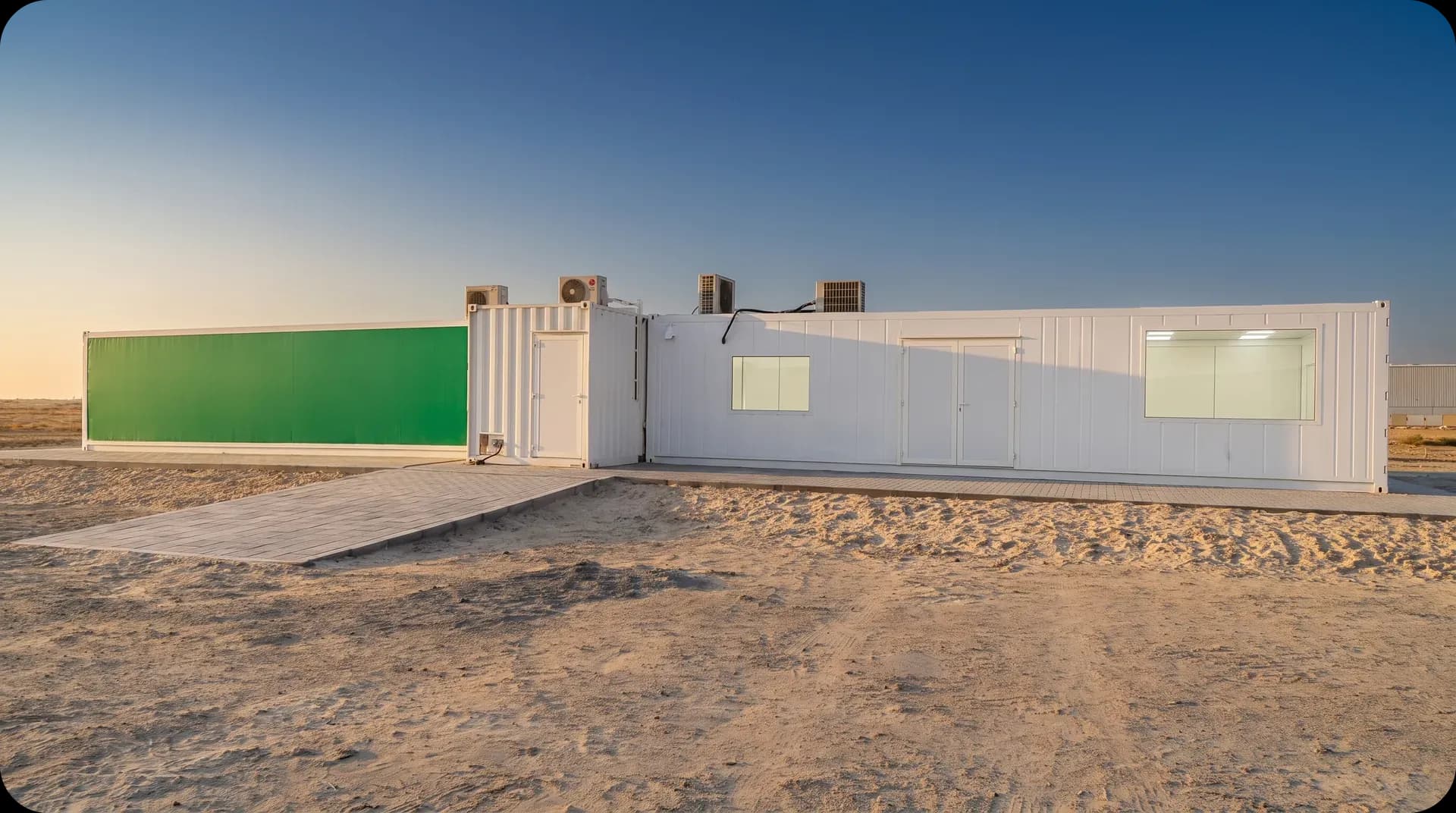
Aerovertica runs vertical strawberry farms in Dubai, combining B2C pick and pay with B2B supply, proving consumer appetite for premium local produce. Madar Farms operates modular hydroponic farms inside shipping containers, a deployment model relevant to distributed infrastructure nodes that do not require permanent facility commitments. CRYSP Farms delivers farming as a service to hotels and resorts, validating recurring contract structures for agricultural infrastructure in this market. Badia Farms, the GCC's first commercial indoor vertical farm, established years ago that premium buyers would pay for locally grown, pesticide free produce.
Signal: Demand proof is established. Buyers in this market are no longer being educated on the concept. And every one of these operators is a potential downstream consumer of guaranteed, sovereign grade input supply.
What the map actually shows
Every player above is, at its core, a production company. They grow things. Their competitive moat is operational efficiency, yield optimisation, water management and distribution. Their ceiling is the margin available in fresh produce supply chains, which is structurally constrained, and their risk is the capital intensity of the physical asset.
Two of the most advanced technology companies in this landscape have been through restructuring in the last three years. That is not a criticism of their engineering. It is a statement about where value accrues in the stack.
Where Seedelligence stands
Seedelligence is not a production company. It is a sovereign infrastructure platform, and Red Rock's AI Brain for food systems.
The distinction is architectural. Seedelligence does not compete for shelf space. It addresses the upstream layer that every production company depends on: seed origin, genetic integrity, and the provenance and continuity of the UAE's agricultural inputs.
No operator in the map above has publicly claimed that position. The 680 million dollar Plenty and Mawarid programme, the GigaFarm, the AeroFarms research facility, the ADQ park: all of them sit downstream of the problem Seedelligence addresses. They need seeds. They need guaranteed supply. They need sovereign provenance.
The opportunity is not to build a better vertical farm. It is to become the infrastructure layer without which none of these facilities can credibly claim food sovereignty for the UAE.
Why the position is still open
As of September 2026, on our assessment of publicly available information, the position remains structurally uncontested. The reason is architectural rather than accidental.
Each player in this landscape has solved one dimension of the problem. Bustanica solved scale. AeroFarms solved arid climate research. Pure Harvest solved commercial distribution. GigaFarm is solving circularity. What none of them has built is the integrated combination of three things: sovereign seed origin, AI governed supply chain intelligence, and institutional ownership architecture.
Those three layers require a different founding mandate, a different capital structure, and a different relationship with government than a production company can pursue. Seedelligence was designed from inception to occupy exactly that intersection.
This is the same design logic Red Rock applies across the group, from AI agent infrastructure to enterprise AI governance: build the layer institutions cannot operate without, and build the governance around it before it is needed. We wrote about that principle here: Most Companies Fix Their Structure Later. We Designed Ours Early.
Frequently asked questions
How much of its food does the UAE import? Commonly cited figures place UAE food import dependency between 85 and 90 percent, which is the central driver behind the National Food Security Strategy 2051.
What is the largest vertical farm in the UAE? Bustanica, near Al Maktoum International Airport in Dubai, at 330,000 square feet, with output of more than one million kilograms of leafy greens per year. The GigaFarm under construction at Food Tech Valley is significantly larger in footprint at 900,000 square feet.
What is the difference between a vertical farm and a seed infrastructure platform? A vertical farm produces crops and competes on yield, cost and distribution. A seed infrastructure platform governs the inputs, genetics and provenance that production facilities depend on. The first is a downstream operating business. The second is an upstream infrastructure layer.
What is Seedelligence? Seedelligence is Red Rock Technology's sovereign food infrastructure initiative and AI Brain, combining sovereign seed origin, AI governed supply chain intelligence and institutional ownership architecture. Read more on the Seedelligence page.
Continuing the conversation
Seedelligence is being built as long term institutional infrastructure, not as a product to be launched. The counterparties it is designed for are governments, sovereign vehicles, and industrial groups that operate on infrastructure timelines rather than product cycles.
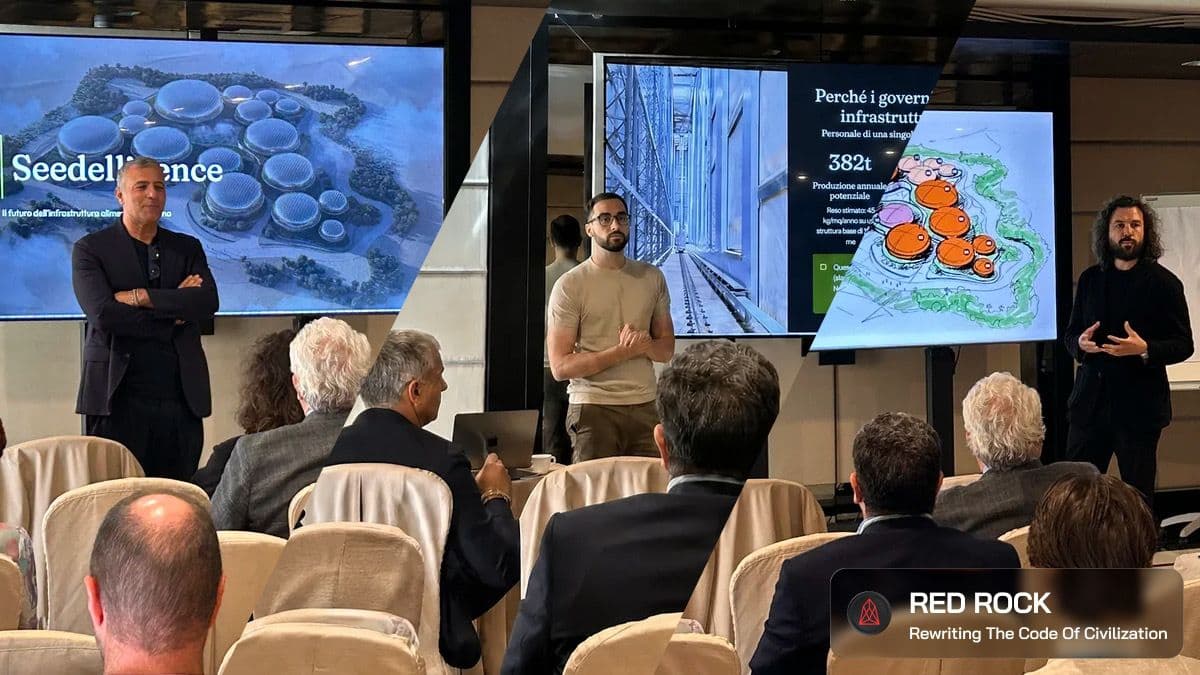
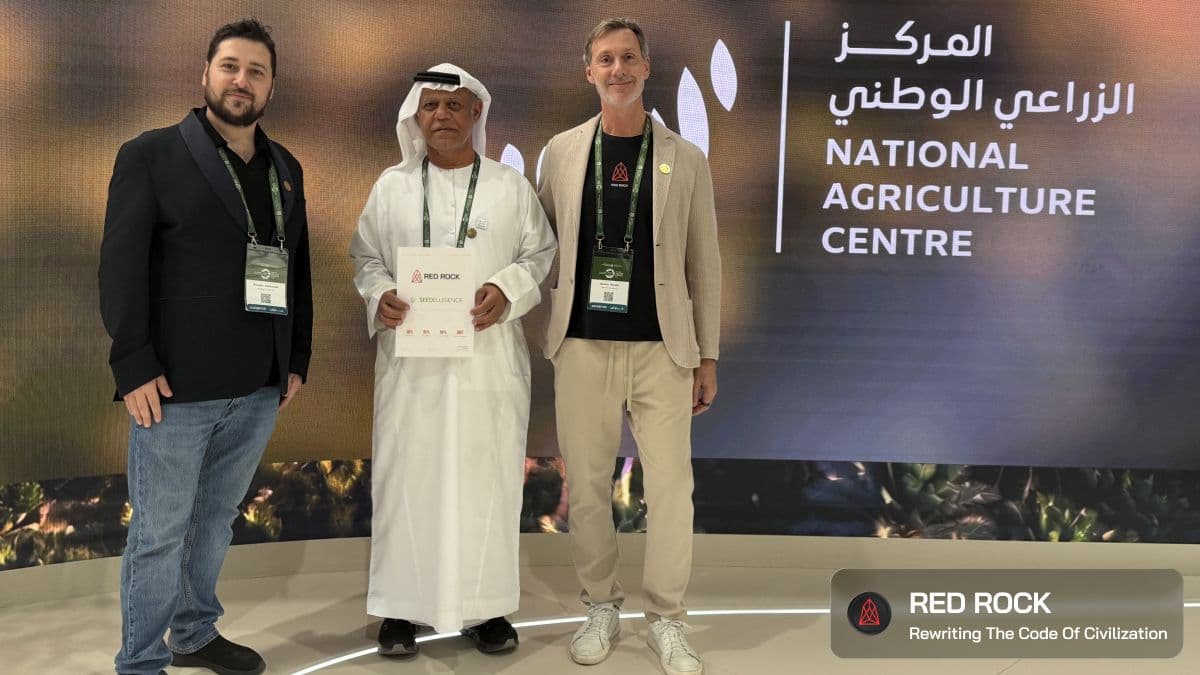
Earlier this year we brought the project to Rome for a private briefing with strategic partners: Seedelligence Comes to Rome. Related reading: Red Rock Technology among the 40 most innovative startups in the UAE at the Emirates Agriculture Conference and Exhibition 2026.
If you represent an institution that should be part of this conversation, reach out to the team directly.
Recent Posts
September 10, 2026
July 7, 2026
May 25, 2026
May 18, 2026
April 26, 2026
Related Posts
May 25, 2026

March 20, 2026

March 18, 2026
March 12, 2026
March 9, 2026
 Email
Email Location